
Beach Access and Customary Use: Breaking Down SB 1622
If you've spent time on the beaches of Walton County, you may have heard the term "customary use"—a legal concept referring to the public's traditional use of dry sand areas, even those located on privately owned beachfront property. Over time, what began as an informal tradition has become the subject of legal and legislative attention.
In 2025, the Florida Legislature passed Senate Bill 1622 (SB 1622), revisiting how customary use is handled across the state and particularly in Walton County.
Understanding the Background
In 2018, a state law limited the ability of local governments to declare customary use without first going through a judicial process. Walton County was the only Florida county to pursue this route, filing a lawsuit to determine whether customary use applies to portions of its 26-mile coastline. That case is still underway.
Since then, questions around beach access have remained a point of discussion for both property owners seeking legal clarity and residents and visitors accustomed to using the dry sand portions of the beach. The issue has involved local government, the courts, and the broader community.
What SB 1622 Changes
Signed into law on June 24, 2025, SB 1622 updates how Florida handles beach access and customary use. Most importantly, it restores some local authority by allowing counties to recognize customary use—but only if a judge approves it first. This ensures property owners are protected while also giving communities a path forward to preserve public access.
USA Today Network says, Governor DeSantis described the bill as restoring "local control" and reducing barriers to address the issue through local governance. State Senator Jay Trumbull, who sponsored the bill, called it a way to support families and long-standing beach traditions.
The legislation also helps streamline beach restoration efforts by clarifying public access rights to renourished areas where public funds have been used.
What This Means for Walton County
Although SB 1622 opens the door for new local action, no immediate changes take place without additional steps by the Walton County Board of County Commissioners. County Attorney Clay Adkinson has noted that if a new ordinance is proposed, the goal will be to bring greater consistency and clarity to beach access across the county's 26 miles of coastline.
In recent years, confusion over signage and boundaries — including an increase in "Private Beach" signs — created concern among residents and visitors alike. Some community members have expressed hope that the updated law will allow for a more unified approach moving forward.
Staying Informed
The issue of customary use continues to evolve, and any new ordinance would involve public hearings and a formal process. In the meantime, visitors should continue to use public beach access points and stay informed by checking resources like:
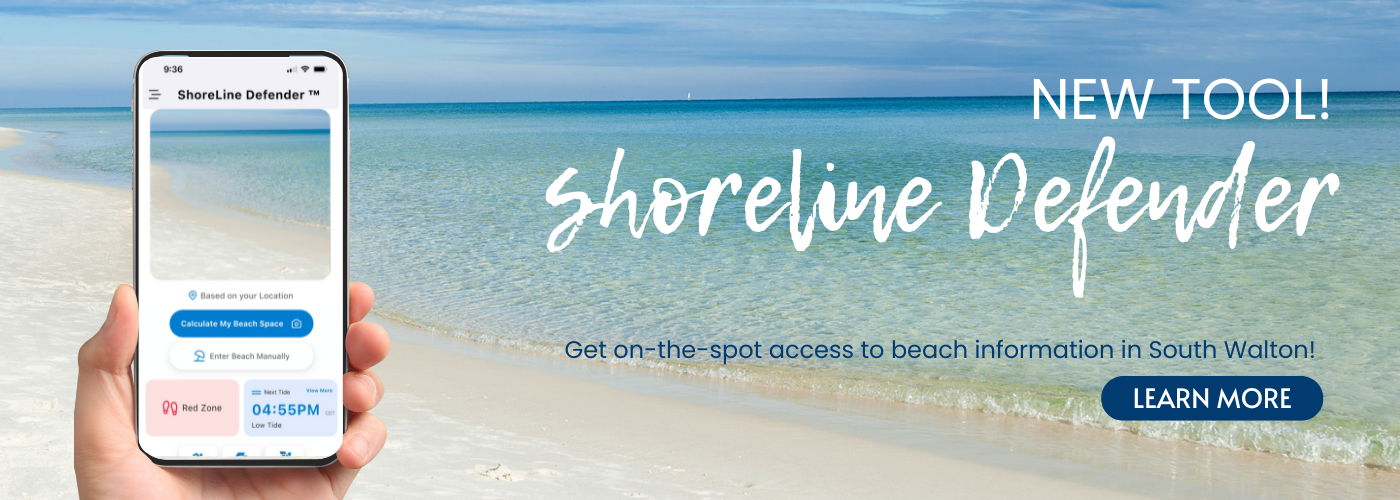
New Tool: Shoreline Defender App
A helpful new resource is now available for beachgoers looking to better understand where public access ends and private property begins. The Shoreline Defender app is optimized specifically for Walton County, Florida. It uses your phone’s location, tide station data, and real-time elevation to show whether you're standing on publicly accessible wet sand or privately owned dry sand at the shoreline.
It also includes forecasting tools, so you can plan ahead and see when water levels are expected to drop below the Mean High Water Line (MHWL)—a key legal marker for public beach access in Florida.
Shoreline Defender makes it easy: if it’s green, it’s public. Download the APP!
Posted by Robin Maynard on
Enjoy this blog post? Click here to subscribe for updates
Leave A Comment